Department
Performance MarketingService
- (007)Meta Ads


We blend strategy, creativity, and technology to help brands grow, connect, and stand out in an ever-evolving digital world.





The leads were coming in. The numbers just weren't adding up.

Department
Performance MarketingService

Getting Leads Wasn't the Problem.
Accelerate is a personal branding program by Editoz Club, founded by Sri Lankan entrepreneur Chali Weerakkody. Through Editoz Club, Chali works with entrepreneurs and investors associated with Shark Tank, including Robert Herjavec, Daniel Lubetzky, Lori Greiner, and Davie Fogarty.
Accelerate was built to help entrepreneurs strengthen and scale their personal brands. When Zephra came in, paid acquisition was already bringing people into the funnel.
The problem was what happened next.
Leads were costing approximately $200 each. Tracking lacked clarity, appointment bookings were inconsistent, and the campaign needed a much clearer connection between advertising spend and actual sales.
The objective wasn't simply to generate more leads. It was to make every stage of paid acquisition more effective.
Reduce acquisition costs → Improve lead quality → Increase bookings → Generate sales
Department
Service
Accelerate didn't need another campaign chasing cheaper leads at any cost.
We needed to understand what happened after someone entered the funnel, identify which audiences were worth investing in, and improve how the campaigns translated interest into appointments and sales.
That meant refining five connected areas of Meta Ads management.
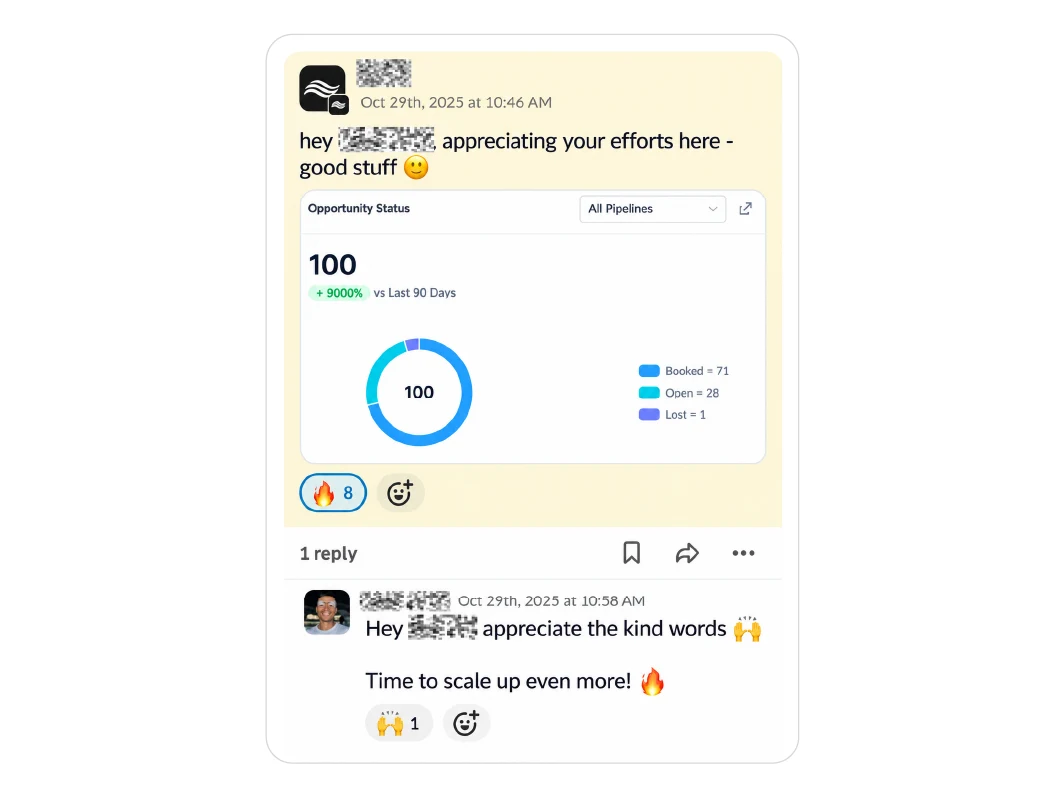
First, We Needed to See What Was Actually Happening.
Before optimizing campaign performance, we needed a clearer understanding of what that performance actually meant.
We improved end-to-end funnel visibility so results could be measured beyond lead volume, through to appointments and sales.
This gave us a more useful picture of acquisition performance and helped identify which leads were contributing to actual business outcomes.
The question shifted from "How cheaply can we get a lead?" to "Which leads are actually worth acquiring?"
Cheaper Leads Weren't Enough. They Had to Be the Right Leads.
Generating more leads means little if they aren't the right people.
We restructured audience targeting around higher-relevance prospects, reducing wasted advertising spend and improving the quality of incoming opportunities.
Rather than pursuing lead volume for its own sake, we used campaign data to understand which audiences were showing stronger potential and where further optimization was justified.
This helped make acquisition more selective, efficient, and commercially relevant.
The Message Had to Match the Person Seeing It.
Better targeting needed better communication.
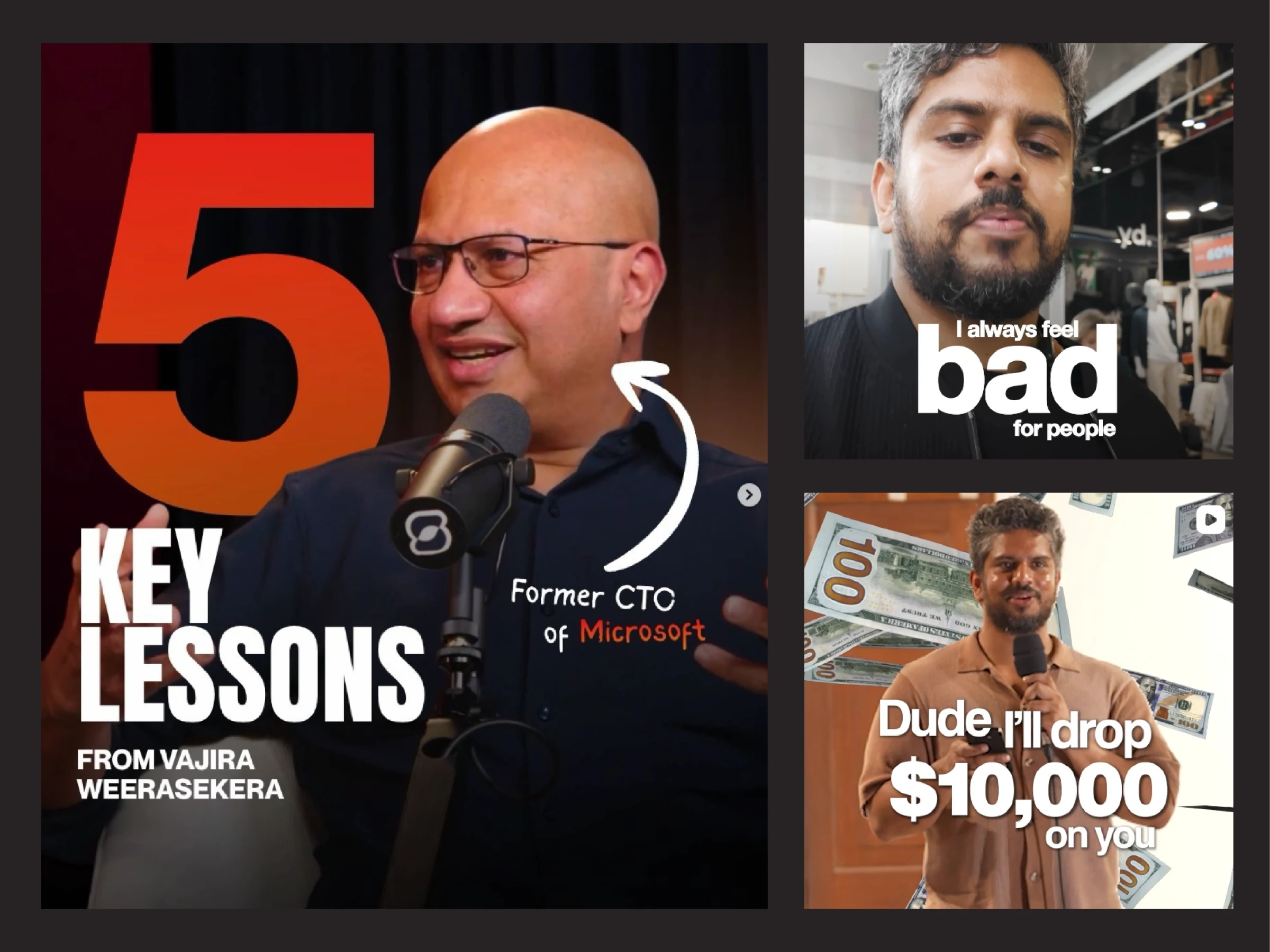
We refined campaign positioning, hooks, and creatives for distinct professional audience segments, making Accelerate's messaging more relevant to the people the campaigns were designed to reach.
This meant adjusting how the program's value was communicated across different audiences, rather than relying on the same approach for everyone.
The objective was to make the offer more compelling to prospects with stronger potential to convert.
Not Every Good Prospect Converts the First Time.
Not every interested prospect is ready to book immediately.
Instead of relying entirely on cold acquisition, we activated remarketing to re-engage audiences who had already demonstrated interest in Accelerate.
This gave higher-intent prospects another opportunity to return to the funnel and take the next step.
It also allowed the campaigns to continue working with existing interest, rather than repeatedly paying to begin every interaction from zero.
And Then We Kept Optimizing.
Improving campaign performance required continuous attention to what the data was telling us.
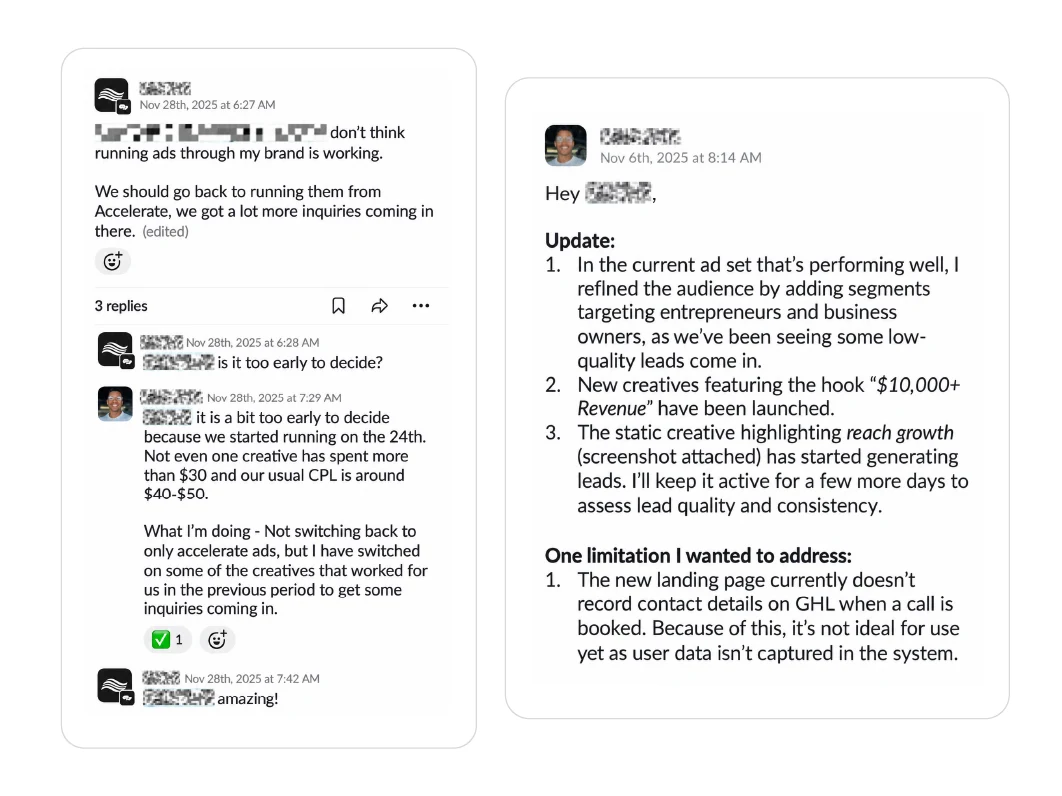
When questions arose around channel effectiveness and lead quality, the answer wasn't to immediately dismantle campaigns and start again.
We monitored live performance, refined weaker audiences, improved creatives and delivery, and adjusted campaigns based on what was actually working.
Equally important was knowing when not to make changes.
Short-term fluctuations weren't always a reason to abandon an approach that was producing results. By evaluating performance in context, we could protect effective campaigns while improving the areas that needed attention.
This ongoing optimization helped improve acquisition efficiency and the outcomes further down the funnel.
The commercial shift was also reflected in reported sales. Over the three-month engagement, Accelerate went from approximately $3,000 in sales before Zephra to $15,000 afterward.
This gave the campaign a more meaningful measure of progress than lead volume alone.
From Expensive Leads to Measurable Revenue.
Over three months, Accelerate's paid acquisition became considerably more efficient, but the improvement went beyond cheaper inquiries.
A stronger appointment booking rate showed that the campaign was doing more than bringing people into the funnel. It was helping create better opportunities to move them forward.
With improved visibility into the acquisition journey and stronger returns on advertising investment, Accelerate could measure performance against business outcomes rather than lead volume alone.
Return on Investment (ROI)
Cost Per Lead Reduction (CPL)
Appointment Booking Rate Increase
Return on Ad Spend (ROAS)
Performance Should Do More Than Just Convert.
Accelerate started with a familiar challenge: leads were coming in, but their commercial value wasn't clear.
For us, this engagement reinforced that effective advertising isn't simply about generating more interest or reducing acquisition costs. It's about understanding what happens next and making every stage of that journey more valuable to the business.